


Agriproject, Propcom+ train students on vaccinating village chickens against Newcastle disease
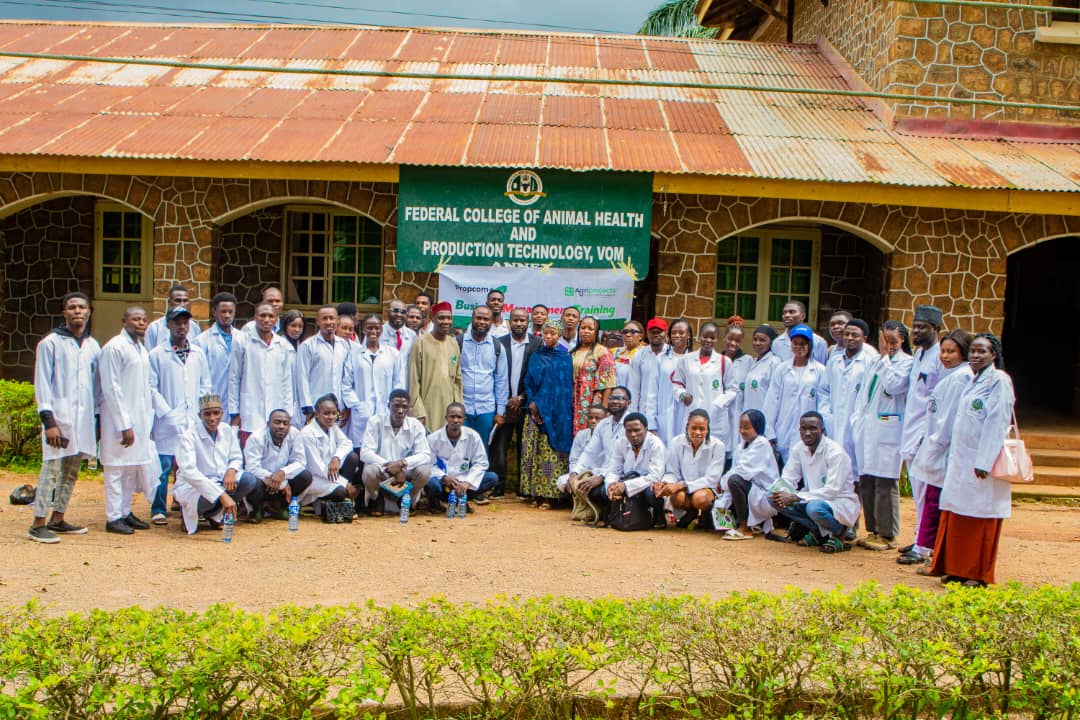
About 100 graduating students of the Federal College of Animal Health and Production Technology, Vom, Plateau State, are being trained as village-based vaccinators for controlling Newcastle disease in village chickens in rural communities.
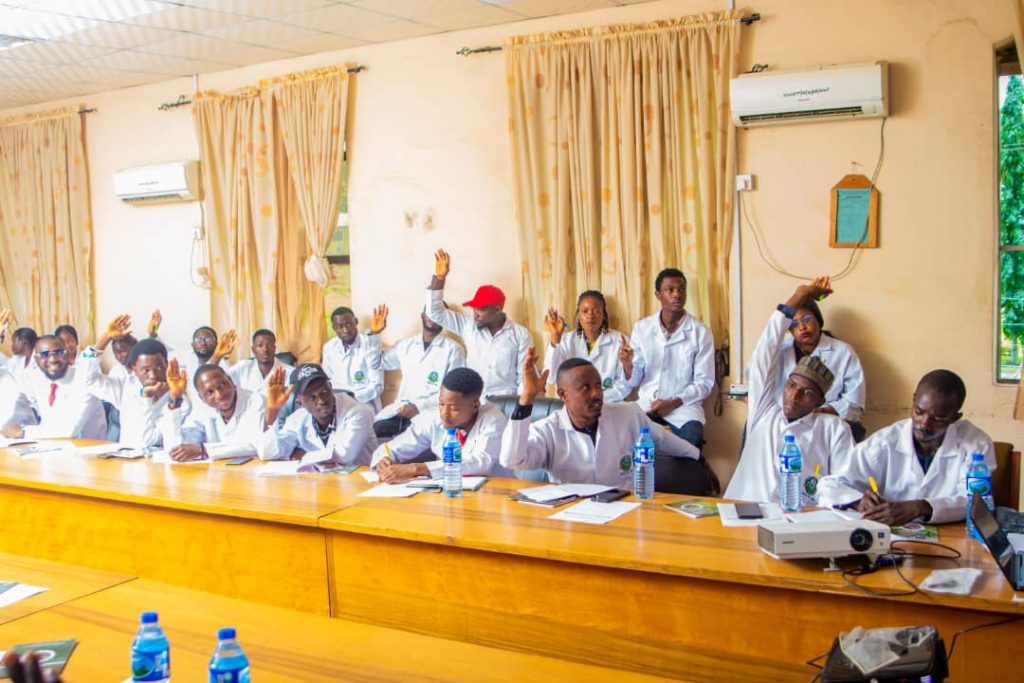

The training is being undertaken by Agriprojects Concept International Limited in partnership with Propcom+.
Technical Sales Representative of Agriprojects Concepts International Ltd, Dr. Solomon Tugga Andy, and representative of Propcom+, said that as a solution provider in the agricultural sector and consultancy services providers, Agriprojects is providing services to rural farmers on how to vaccinate their birds being one of the greatest challenges they face in the poultry business.
He said, “We chose to train them on Newcastle disease because Newcastle disease is a broader disease that constitutes one of the major challenges faced by farmers in our communities and has affected farmers in devastating ways.”
“Propcom+ representative said, “So, it has always been, you know, part of the objective of our organization to build resilience among smallholder farmers. And one of the ways to achieve that is actually to find a model through which the unreached smallholder farmers, the poultry, livestock farmers and small remnant farmers can be reached.
“And the only way you can bridge that gap for them to have access to vaccine is by ensuring that you get foot soldiers, trained foot soldiers to build their capacity and then also not just building their technical capacity, but build a business and entrepreneurship management skills on them to be able to see the business that is in need.
“Because if you look at the statistics, it has been proven that most of the protein that is consumed In our economy today, 80% of this is from the rural communities. So, and the best way that can be done to improve food security and to improve nutrition is by ensuring that there are foot soldiers who are veterinary professionals and community and mind workers that can be able to create awareness on the availability of vaccine and also be able to provide these services to smallholder farmers across their various communities and local governments will at least ensure that the unreached farmers are reached with this information.
“And also with the services so what then happened at the end is that there is an increase in flock size, which will lead to increase in in in livelihood and income so you will see a small farmer can be able to to improve their livelihood can be able to send their children to school can be able to support the family, especially women because it has been proven that women are mostly the ones who are in charge of these small backyard businesses.”
Provost of the College, Dr. Jude Obi Okpara, who spoke to our correspondent on the essence of the training, said that breeding of chickens at homes constitute the greater percentage of protein intake for most households who rear chickens in small spaces.

Okpara described Newcastle disease as a limiting factor in poultry production in the country and has been known to constitute more than 70 percent of fatalities in birds. He said that the trainees were supposed to serve as interventions in various communities to assist such level poultry producers to vaccinate the birds against the disease.
Okpara said, “This training is very very important because the disease in question I can say is a limiting factor in poultry production in this country and selecting Newcastle disease as a pilot program is something that is very very commendable because almost in every vicinity in this country you have women in particular you know rearing these birds and most often during the periods especially between october november every year you can’t believe it that more than 90 percent of those birds are gone due to lack of proper veterinary care.
“Training these children with the aim of targeting and reaching the grassroots is in line with the food security agenda of the present administration and the benefits cannot be overemphasized.
These are graduates who are selected based on their track records of dedication uprightness and most especially their interest in the husbandry you know because you may have the wherewithal you can be armed with all the certificates but if you don’t have the interest to deliver we are going nowhere.”
He described Newcastle disease as an air borne endemic poultry disease prevalent in this country that can affect thousands of birds within minutes even one of them is infected and can have mortality rate of even up to 100 percent, meaning it can wipe out an entire poultry farm.
“Newcastle disease is endemic, so it’s here with us and it’s a limiting factor to poultry production in this country. According to him, the reason why the mortality rate is high is because most still rely on the traditional way of treating this disease, adding, “You know the traditional approach which most often though effective cannot be compared to using the vaccines already developed for the control of the disease. He said that another aim of the training in not just understanding the epidemiology of this disease but ensuring that the births are vaccinated at the right time, stressing that being a viral disease, the only way it could be controlled is through vaccination, the drugs being produced at the National Veterinary Research Institute, NVRI.
Head of the Department of Animal Health of the College, Dr. Habbiba Momoh, described the training as very important as it affords the graduate students the opportunity of putting into practice and fully embracing what they have learnt in the classrooms.
She said that with the harsh economic realities, the graduates will not be looking for jobs as bird rearing is practised at most villages and homes