
To end corruption in Nigeria, concerted efforts must be made to punish bad behaviours – Eze Onyekpere, Lead Director, CSJ
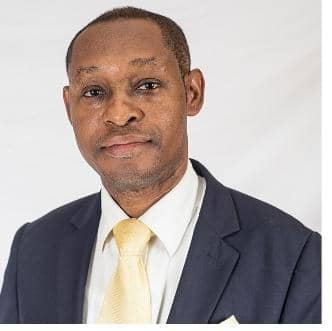
For two days, Centre for Social Justice, in collaboration with The Rule of Law and Anti-Corruption Programme (ROLAC) in a major initiative funded by the European Union (EU) and implemented by the International Institute for Democracy and Electoral Assistance (IDEA), gathered Civil Society Organisations (CSOs)and media partners in a workshop in Abuja, aimed at strengthening anti-corruption reforms across Nigeria, fostering compliance with anti-corruption laws and policies at the national and subnational levels, with the ultimate goal of improving the rule of law and governance. In this interview Eze Onyekpere, the Lead Director of CSJ, enumerated the essence and gains of the workshop.
There is one question that is always on the lips of many Nigerians. Can we, in the life of this country eradicate or reduce corruption? .
In no part of the world has corruption been totally eradicated;so we can only hope for a reduction. I believe that corruption can be reduced in Nigeria to manageable proportions, but it will only happen the day actions and reactions begin to attract consequences. Law is defined as the command of the sovereign backed by sanctions. Once there are no sanctions for inappropriate or illegal behavior, people will continue to behave any way they like. That is the difference between countries like Nigeria, the United States, Britain, or France. It is not that people in civilized climes do not have the propensity to be corrupt, but they are sure that in 90% of the cases, they will be caught, prosecuted, and sanctioned appropriately. In the foregoing circumstance, individuals respect and obey the laws to avoid assured sanctions. The deterrence function of law enforcement and prosecutions scares away would be corrupt persons. That is the difference between advanced societies and Nigeria – ability to sanction offenders. That deterring function of the law is missing in Nigeria.
It does appear that corruption has been so institutionalized that it’s taken as a way of life. Why is corruption so peculiar and endemic in Nigeria?
It is a leadership challenge that was also accentuated by facts like military dictatorship leading to the absence of a democratic culture. It did not start today, but it has been accentuated under civil rule. This has led to the mismanagement of public resources and the fact that we did not and still do not have social cohesion from the colonial times up to today. There has never been a real Nigeria in the sense of a country where everybody bears allegiance and is proud to say, just like we have Americans, always proud about USA. At the same time, there’s no collectively shared Nigerian dream. We do not have a national vision that unites all Nigerians. Rather ethnicity, religious intolerance, nepotism, greed, state capture and chauvinism have torn Nigeria apart. This has been demonstrated by the Buhari and Tinubu administrations. You see the lopsided manner of appointments. Nigeria is heavily indebted. Monies have been borrowed and mismanaged and the youth seem to have no future. So how can be overtly committed and bear true allegiance to that country that’s treating you like a subhuman. So, these are part of the challenges. The challenge of the lack of social cohesion encourages corruption, mismanagement and abuse of resources and power.
What is very intriguing about the situation is that corruption tends to be systemic. Life has become so unbearable. How for instance will you pay a minimum wage of N70,000 and expect an average Nigerian to pay for a year rent for an apartment. Where do you expect him to get the money? Can we at least try to change the system, our way of doing things?
Corruption is systemic and systematic. We are faced with both the cost and effects of corruption. The fact that resources were mismanaged is what makes it impossible for a child to get a good education without the parents paying very high school fees in private institutions. It also makes it impossible for citizens to access good health services. It is responsible for a salary structure or take-home pay that never takes anyone home. And then this becomes the reason for the majority to engage in survivalist corruption, corruption to survive. Essentially, the cost and effect are fallouts of poor leadership. It requires good leadership to stop the vicious cycle. This informs the gravitation of Nigerians towards individuals with good character during elections, as happened during the 2023 presidential election, even though the system truncated the choice of the people. It is not about education, because most of the people who have been running and ruining Nigeria are professors, doctors, lawyers. Character is essential; ethics and morality for whoever is going to occupy leadership position – president, governor, minister, etc. It is so important. Once there is integrity deficit in leadership, the country becomes rudderless and there will be under development just like what we witness currently.
Now, we have a plethora of anti-corruption agencies competing for space and attention, yet the problem is increasing. Don’t you think that one of the reasons is the competition among these agencies. Can’t we streamline their operations or at least reduce them?
Just like you have democracy without democrats; you have candidates emerging from parties who don’t believe in democracy; they’re all planning to hire thugs, to snatch the ballot box to, and at the end of the day, run to the judiciary to validate their so-called victory. From day one, we never had democracy, but Nigeria claims to be a democracy. This is the reasons why you have so many anti-corruption agencies but corruption is still looming large in our environment today They seek to fight corruption, but those who wield the governance/political to drive the fight do not really believe in the fight against corruption. Some of anti-corruption actors are simply doing a normal job to earn a living, and even using the system to exploit others because there are cases of officials of some anti-corruption agencies or even judges accepting bribes to defeat the ends of justice. Q. You talked about deficiencies in the composition of Conduct of Conduct Tribunal. What are those changes that you expect in the CCT. A. We had expected the Code of Conduct Tribunal, for instance, to have many panels sitting at geopolitical zones. And in the panel of three, apart from the chairperson, you should have judicial officers being on the panel, not just the chairman. The CCT makes decision that can ruin, make or mar people’s lives, careers and livelihoods. I mean, Chief Justice Onnoghen was removed from office on the basis of their judgment. OK, people can be barred from participating in politics for a period of time on the basis of their ruling. So in a sense, we expect the tribunal to have a panel of judicial officers properly so called. And that is tribunal should be subject to the oversight and disciplinary responsibility of the National Judicial Council.
You talked about the Online Assets Declaration System (OADS). How will it help the anti-corruption fight?
The online access declaration system designed by the Code of Conduct Bureau implies that since there could possibly be over 15 million people to declare access from the local government cleaner to the president of the federal republic, assets declaration can be done online using laptops, desktops or even had held GSM phones. Where would the CCB store 15 million hardcopy files? And a teacher in one remote village, how is he supposed to declare his assets? So, providing for OADS makes it easy and once the declarants are sensitized, with your phone, you can declare your assets and press send on the button. Since it is going into cyberspace for storage, CCB doesn’t need to hire big warehouses to store files. And with a good computer software and programs, it is going to be easy to search for declarants, raise red flags and ensure proper follow up and investigations. It will reduce the costs for declarants to declare their assets.It will also reduce cost for government in handling assets declaration. OADS will facilitate operational efficiency to the extent that you can easily search out somebody’s name and find out what has happened and be able to send him or her a mail indicating compliance or non-compliance with the regulations. It provides opportunity for harmonization with other government databases – links between OADS/CCB and the Inland Revenue Service, FIRS, the tax people, Abuja AGIS – the land registry, motor licensing office, Corporate Affairs Commission, etc. investigations, red flags, follow-ups, etc., can be easily resolved through access to information. OADS introduces automation and should increase collaboration between various agencies of government.
The legality of EFCC is being challenged by the state governments. Do you think that that challenge is appropriate?
It’s inappropriate, it’s a waste of time and resources, and I don’t see it succeeding because EFCC’s establishment can be linked to section 15 (5) of the 1999 Constitution – Directive Principles and Fundamental Objectives of State Policy directing the state to abolish corrupt practices and abuse of power. Under item 60 of the Exclusive Legislative List, the executive and legislature can work together to set up new commission, to take legislative and policy steps to enforce the observance of the Fundamental Objectives and Directive Principles of State Policy.
For the past two days, you have gathered CSOs in these brainstorming sessions. What is the essence of this workshop? Have you achieved the objectives you set at the outset?
The objectives have been achieved. We’ve concluded and I think we have met the objectives. First of all, we are building capacity of CSOs on anti-corruption intervention strategies; looking at agencies and issues in anti-corruption. What is the mandate of for instance the EFCC, ICPC, Auditor General, Code of Conduct Bureau, etc?. How have they been going about carrying out that mandate and where is the opportunity, timing, for civil society to intervene? What can we do to assist the anti-corruption agencies? What can we do to reduce corruption in Nigeria?This is what we’ve been discussing and we prepared a manual which we have validated. Apart from the knowledge we’ve disseminated at this workshop, the manual will be published after further validation with anti-corruption agencies so that it will become a working tool available to the public in hard and electronic copies. We are building a coalition of actors ready and willing to facilitate the fight against corruption.
Is there another thing you would want to say which I did not ask you?
A. Well the media has a great role to play to disseminate information widely, engage in investigative journalism. I see NGOs and media as part of civil society because there are three divides government, private sector and civil society. Media, professional groups, academia, women’s groups, etc., are all part of civil society.They all need to play their roles in the anti-corruption crusade.